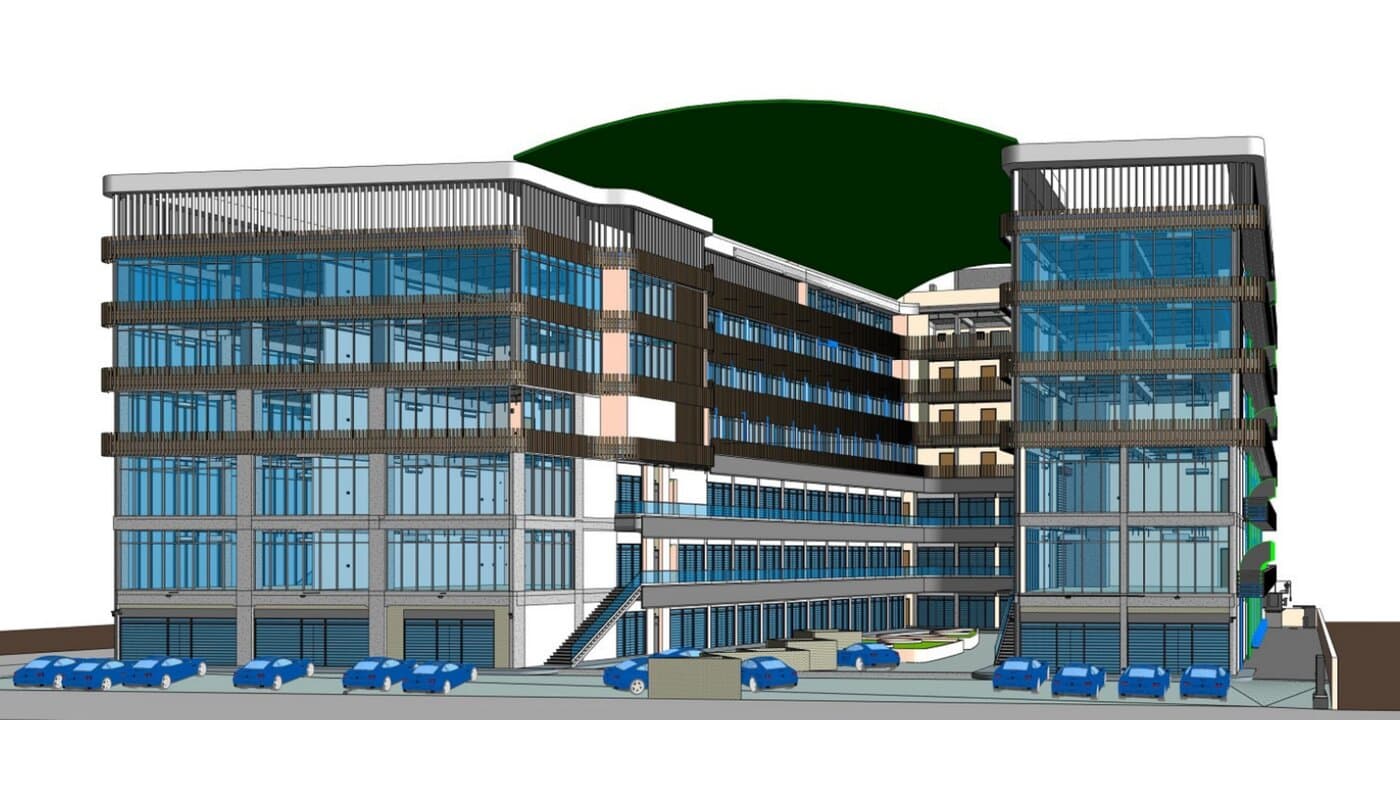

Terminal and marine infrastructure, captured and coordinated around live throughput.
Port terminals and marine structures operate around the clock, and any survey or design work has to fit inside operational windows without slowing cargo throughput. We bring the same reality-capture and federated-coordination approach used on large logistics facilities to marine and terminal infrastructure — terrestrial and UAV capture where standard access is limited, registered into a single accurate as-built baseline.
Structural, MEP, and mezzanine or dock-equipment systems are modelled at LOD 300 directly from that capture, giving refurbishment, expansion, or fit-out contractors a model they can plan against without a return site visit — critical on a site where every additional mobilisation competes with live berthing schedules.

<1cm
Registration accuracy across large-footprint terminal capture
0
Additional site visits required for phase-one design
LOD 300
As-built structural, MEP, and dock-equipment modelling
Every
Port Authorities & Terminal Operators
Serving port authorities, terminal operators, and marine infrastructure owners.
Marine & Structural Engineering Teams
Serving marine, structural, and MEP engineering consultants.
Expansion & Refurbishment Teams
Serving contractors delivering phased terminal refurbishment or expansion.
01
Port Authorities & Terminal Operators
Serving port authorities, terminal operators, and marine infrastructure owners.
02
Marine & Structural Engineering Teams
Serving marine, structural, and MEP engineering consultants.
03
Expansion & Refurbishment Teams
Serving contractors delivering phased terminal refurbishment or expansion.
The constraints we design around.
24/7 Operational Constraints
Terminal and dock operations rarely pause — capture and survey work has to be scheduled entirely around live throughput, with no access to active berths or aisles during peak windows.
Large-Footprint Coverage
Terminal sites often span a scale that makes single-technique capture impractical, requiring an integrated terrestrial and UAV approach registered to one accurate dataset.
Marine Structure Access
Dock structures, quaysides, and marine elements frequently sit beyond standard survey access, requiring adapted capture methodology.
Phased Expansion Planning
Terminal expansion or refurbishment programmes typically run in phases over years — every phase needs to plan against the same reliable as-built baseline.
One discipline, applied consistently.
Capture Around Live Throughput
Terrestrial and UAV capture are scheduled entirely around berthing and operational windows.
Capture Around Live Throughput
Terrestrial and UAV capture are scheduled entirely around berthing and operational windows.
Model Structure & Equipment
Structural, MEP, and dock-equipment systems are modelled at LOD 300 directly from the capture.
Validate Marine Structures
Quaysides and marine elements are verified using adapted capture methodology built for restricted access.
Enable Phased Expansion
The as-built model is structured so every future phase plans against the same accurate baseline.
<1cm
Registration accuracy across large-footprint terminal capture
0
Additional site visits required for phase-one design
LOD 300
As-built structural, MEP, and dock-equipment modelling
Multi-Phase
Expansion programmes supported from one baseline
What sets this apart.
A missed capture window on an operating terminal doesn't just cost time — it competes with berthing schedules that aren't rescheduled for a site survey.
Talk to usCapture around live throughput
Scanning is scheduled entirely around berthing and operational windows, with zero disruption to terminal throughput.
Integrated terrestrial + UAV coverage
Large-footprint sites and marine structures are captured using a combined methodology registered into one coherent dataset.
Phase-ready as-built modelling
The as-built model is structured so multi-year expansion or refurbishment phases can each plan against the same accurate baseline.
Zero return-visit track record
Capture and modelling are planned to deliver complete, usable coverage in a single mobilisation.
We're building out our published case-study library for ports & maritime — browse the full project portfolio to see the same coordination standard applied across sectors.
View all projects