
The Challenge
Establish the information requirements, BEP commitments, and CDE structure to support a digital twin from Stage 2 — not retrospectively at handover.
The Outcome
Digital twin information requirements agreed at Stage 2 and embedded in all appointment documents. Asset data schema accepted by the FM operator before Stage 3 commenced.
The
Undefined digital twin scope
The developer's brief included "digital twin" as an aspiration but lacked any definition of what data the twin would contain, who would use it, or how it would be maintained. Without a specification, the design team had no basis for delivering FM-ready data.
FM operator not engaged
The FM operator had been appointed but had not been consulted on their data requirements. Digital twin projects that define data schemas at handover inevitably discover gaps that are expensive to fill retrospectively.
No BEP commitment for asset data
The existing BEP covered model geometry and coordination but contained no commitments for asset data delivery — the specific data fields, formats, and population stages that the FM operator would need.
What
What
FM operator engagement
BEP translation
How
FM-first specification
We started with the FM operator's requirements rather than the design team's capability. The asset data schema was defined by what the FM operator needed to operate the building, then translated into delivery requirements that the design team could plan for.
Measurable BEP commitments
Each digital twin data requirement was translated into a specific, measurable BEP commitment: which appointment package was responsible, at which stage the data field would be populated, and what acceptance criteria the FM operator would use to verify it.
Parallel CDE structures
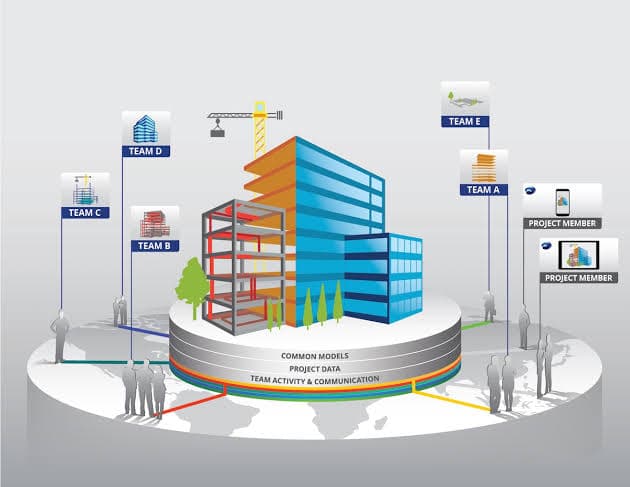
The CDE was set up with both a coordination structure (supporting design and construction) and an FM structure (the one the operator would inherit). Both were live from day one, so the FM team could see data as it was populated rather than receiving it as a bulk handover.
The
The developer's brief for this 55-storey residential tower included a digital twin requirement. The problem was that digital twin had been included in the brief as an aspiration rather than a defined deliverable — there was no asset data schema, no CDE structure agreed with the FM operator, and no BEP commitment that would survive scrutiny.
We were appointed to establish the digital twin foundation: the information requirements, BEP commitments, and CDE structure that would allow the design and construction team to deliver an FM-ready model at handover.
The first output was a digital twin specification document, agreed with both the developer and the FM operator, that defined the asset data schema — the specific data fields required for each asset class, the format those fields would be delivered in, and the stage at which each data field would be populated.
The specification was then translated into BEP commitments: specific, measurable delivery requirements allocated to named appointment packages, with acceptance criteria that the FM operator could verify at handover.
The CDE was set up with a parallel structure: the coordination structure that supported design and construction, and the FM structure that the operator would inherit at handover. Both structures were live from the moment the CDE was established.
What
Digital twin specification
A comprehensive document defining the asset data schema — every asset class, every data field, the format, the population stage, and the responsible party — agreed by both the developer and the FM operator.
BEP digital twin appendix
An appendix to the project BEP converting the digital twin specification into measurable delivery commitments allocated to named appointment packages.
CDE with parallel structures
An Autodesk BIM 360 environment configured with both coordination and FM delivery structures, with access for the FM operator from Stage 2.
Stage gate acceptance criteria
Defined acceptance criteria for asset data at each stage gate, allowing the FM operator to verify data completeness incrementally rather than at handover.
FM data readiness report
A Stage 3 report confirming that the asset data schema had been accepted, all BEP commitments were on track, and no data requirements had been identified that could not be delivered within the existing appointment structure.
Technology
“Every other digital twin conversation we've had started at handover. Neutec started at Stage 2, which is the only way it can actually work.”
Head of Development, Emirati Developer
Client Representative