

The digital twin doesn't start at handover. It starts on day one.
Neutec Digital Engineering Team
Most digital twin conversations begin after the building is finished. By then, the model has already lost the structure a twin actually needs.
The phrase "digital twin" has entered the brief for most major new-build projects. The problem is that it usually enters as an aspiration — a line item in the employer's requirements — without a definition of what the twin will contain, who will use it, or how it will be maintained after handover. The result is a model that is called a digital twin but functions as an as-built record with better graphics.
A digital twin that is useful to the FM operator differs from a design-stage model in fundamental ways. The FM operator does not need to know the design intent — they need to know what was installed, when it was commissioned, what its warranty period is, what maintenance schedule applies, and how to isolate it for servicing without affecting adjacent systems. This information is not geometric — it is data that lives in the model's metadata, and it needs to be defined, collected, and verified through the design and construction stages, not reconstructed at handover.
Decide these at Stage 2, not at practical completion
- Which asset data the model will carry through every stage.
- The format that data arrives in at handover, agreed with the operator.
- Who owns and maintains the data at each stage of design and construction.
- How the FM team will query the model, not just how designers exchange files.
- The CDE folder and status structure that supports operation, not only delivery.
The definition exercise starts at Stage 2 — before detailed design begins. The FM operator, the developer, and the information manager need to agree on the asset data schema: which asset classes will be tracked, what data fields each class will carry, in what format, and at which stage each field will be populated. This agreement is the digital twin specification. Without it, the design team has no target to deliver against, and the FM team has no basis for accepting what they receive.
Translating the digital twin specification into BEP commitments is where most projects stumble. The specification is written in FM language — asset classes, maintenance schedules, warranty information. The BEP is written in design delivery language — LOD, model elements, information exchanges. Bridging these two languages requires someone who understands both, and who can define, for each data field in the specification, which appointment package is responsible for populating it, at which stage, and how it will be verified.
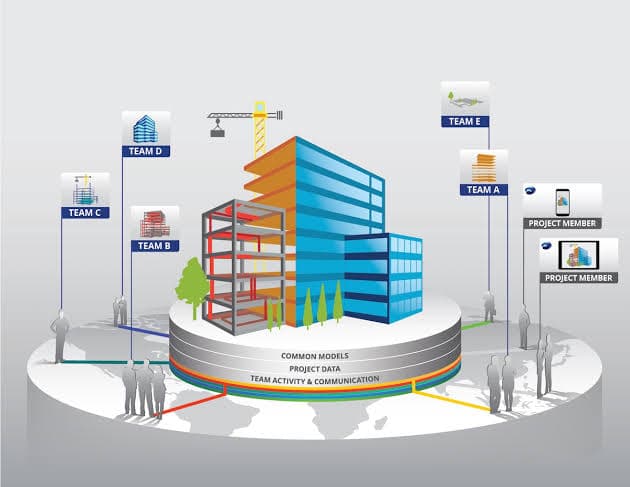
The CDE structure should support the twin from day one. This means maintaining two parallel structures: the coordination structure that supports design and construction workflows, and the FM structure that the operator will inherit at handover. Both structures should be live from the moment the CDE is established, so the FM team can see data as it is populated rather than receiving everything as a bulk handover. This parallel structure also provides early warning: if the FM team can see the data during design, they can flag gaps while corrections are still affordable.
The test of a digital twin is not whether it exists at handover — it is whether it is still being used twelve months later. A twin that the FM team cannot query, cannot update, and cannot integrate with their CAFM system is a model, not a twin. The definition exercise at Stage 2 should include the FM team's technology stack, their query requirements, and their update workflow, because these determine the format, structure, and accessibility of the data the design team needs to deliver.

Neutec Digital Engineering Team
Neutec · Mar 2024
More from Digital Engineering
All posts
Digital Engineering · Mar 2025
Clean handover: structuring BIM documentation your FM team can actually run with.
Digital Engineering · Jan 2025
What data centre fit-outs demand from a coordination model that hospitals don't.

Digital Engineering · Aug 2024