Five things teams overlook when setting up a Common Data Environment.
Neutec BIM Consulting Team
A CDE is more than a shared folder with permissions. Get the naming conventions and workflow states wrong early, and every team pays for it later.
A Common Data Environment is the information backbone of a BIM-enabled project. Get it right and information flows predictably between parties, with clear status tracking and version control. Get it wrong and the CDE becomes an expensive shared drive — files go in, nobody can find them, and the team reverts to email.
The first thing teams overlook is naming conventions. Every CDE platform supports naming conventions, but the conventions need to be agreed across all disciplines before the first file is uploaded — not retrospectively applied after three months of inconsistent naming. The naming convention should be defined in the BEP and enforced by the CDE administrator. A file that does not conform to the convention is rejected at upload, not renamed later by someone who may not understand the content.
The five that catch teams out
- Naming conventions not aligned across disciplines from day one.
- Workflow states defined in the platform but never written into the BEP.
- Access control left broad to simplify setup, costing version control later.
- No supersession rule, so withdrawn revisions stay in circulation.
- External party access scoped after the first exchange rather than before.
Workflow states are the second gap. ISO 19650 defines status codes (S0 through S7 in the UK, with variations internationally), but the CDE platform needs to be configured so that these status codes control who can see and use each document. A model in S2 (Suitable for Information) should be visible to the originating team but not to the design lead who has not yet reviewed it. Most CDE platforms support this, but the configuration requires deliberate setup — it does not happen by default.
Access control is the third area where teams take shortcuts that cost them later. The pressure at project start-up is to give everyone access to everything, on the logic that information sharing is better than information hoarding. This is true in principle but destructive in practice: without role-based access, there is no mechanism to prevent a contractor from working with a superseded revision of a design model, because they can see every revision and may not check which one is current.
Supersession rules — what happens to a document when a new revision is published — are the fourth thing that catches teams. Some platforms make superseded revisions invisible by default; others keep them visible with a status change. The BEP needs to define the supersession behaviour for the project, and the CDE needs to be configured to enforce it. Without a clear rule, withdrawn revisions stay in circulation, and sooner or later someone builds from one.
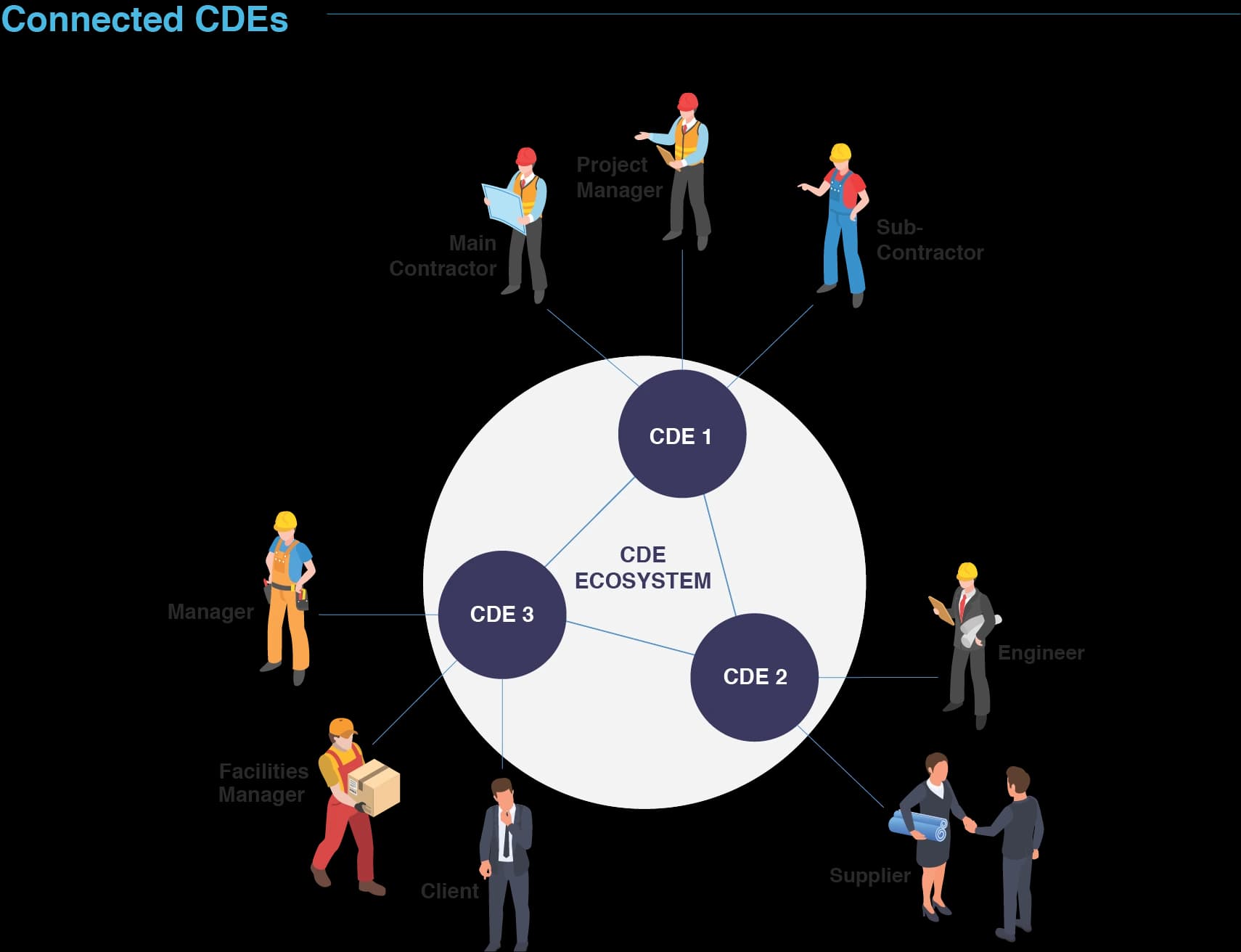
External party access is the fifth gap. On most projects, information needs to be shared with parties outside the core design team — the client, specialist sub-consultants, the FM operator. The access structure for these parties should be defined before the first information exchange, not bolted on when the first external submission is due. Each external party should have a defined view of the CDE that shows them exactly what they need and nothing else — and the access should be reviewed at each stage gate to confirm it still reflects the project's needs.

Neutec BIM Consulting Team
Neutec · Feb 2024